Solubility measurement sits at the center of physicochemical profiling and drug development. Scientists use it to predict how a compound will dissolve in biological fluids, affect absorption, and drive formulation strategy. Poorly soluble candidates often fail in preclinical or clinical stages, so teams now measure solubility much earlier. Researchers combine kinetic and thermodynamic assays with modern analytical tools to capture both fast screening data and robust equilibrium values. These data help medicinal chemists optimize structures, guide salt or polymorph selection, and support regulatory dossiers. Reliable solubility measurement therefore links discovery chemistry with real-world performance in patients.

Common Methods Used to Measure Solubility in Physicochemical Studies
Kinetic Solubility Testing and Its Role in Early Drug Discovery
Kinetic solubility testing measures how much compound dissolves when a DMSO stock is added to an aqueous buffer and mixed for a short time. Scientists use it early in discovery because it needs very little material and supports high-throughput screening. The method reveals the concentration at which precipitation begins, helping teams flag low-solubility hits before investing in costly studies. Kinetic solubility often overestimates true solubility, since solutions can remain supersaturated. Still, it quickly ranks analogs, guides lead optimization, and provides useful input for in vitro assay design and early developability risk assessment.
Thermodynamic Solubility Testing for Equilibrium Analysis
Thermodynamic solubility testing determines the true equilibrium solubility of a crystalline compound under defined conditions. Scientists add excess solid to a medium, agitate the mixture, and allow it to reach saturation over many hours. They then separate undissolved material, typically by filtration or centrifugation, and quantify the dissolved drug. This approach captures the lowest energy state and avoids supersaturation artifacts. It is more time- and material-intensive than kinetic tests, but it provides robust data for physicochemical modeling, salt selection, polymorph comparison, and regulatory submissions. Development teams rely on thermodynamic solubility to support formulation and bioavailability predictions.
Analytical Technologies Used in Solubility Measurement
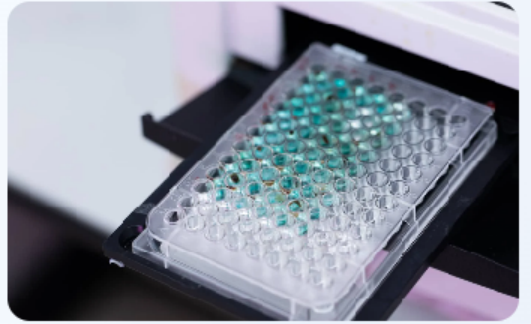
Accurate solubility measurement depends on sensitive and selective analytical technologies. UV‑Vis spectroscopy offers rapid, plate-based quantification when compounds show strong, non-interfering absorbance. High-performance liquid chromatography (HPLC) provides higher specificity and suits complex matrices. LC‑MS or LC‑MS/MS delivers excellent sensitivity for low-solubility compounds or biorelevant media, where excipients and endogenous components can interfere. Analysts use calibration curves, internal standards, and validated methods to reduce error. Automated liquid handlers, plate readers, and integrated software further streamline workflows. Together, these analytical tools support reliable solubility data from early discovery screens through GLP-compliant development and stability studies.

Key Experimental Factors That Influence Solubility Results
The Effects of pH, Temperature, and Media Selection
pH strongly affects solubility for ionizable drugs. Weak acids dissolve better at high pH, while weak bases show higher solubility in acidic media. Scientists commonly measure solubility across a pH range to build pH–solubility profiles and estimate pKa-driven behavior. Temperature also plays a major role: higher temperatures often increase solubility but may change solid form or cause degradation. Media selection must reflect the intended application. Simple buffers suit physicochemical characterization, whereas biorelevant media model gastrointestinal conditions. Careful control and documentation of pH, temperature, and medium composition ensure reproducible data and meaningful comparisons between compounds.
How Crystal Form, Particle Size, and DMSO Levels Affect Solubility
Solid-state properties can shift solubility dramatically. Different polymorphs, salts, or amorphous forms show distinct equilibrium solubilities and dissolution rates. Particle size influences dissolution kinetics: smaller particles dissolve faster due to larger surface area, which can affect kinetic but not true thermodynamic solubility. In kinetic assays, scientists often use DMSO stock solutions to handle lipophilic compounds. However, excessive DMSO can artificially increase apparent solubility or alter aggregation behavior. Teams therefore limit organic content, standardize stock concentrations, and control solid form and size wherever possible. Understanding these factors helps interpret data and avoid misleading conclusions.
Advanced Solubility Studies in Modern Drug Development
Biorelevant Media and High-Throughput Screening Approaches
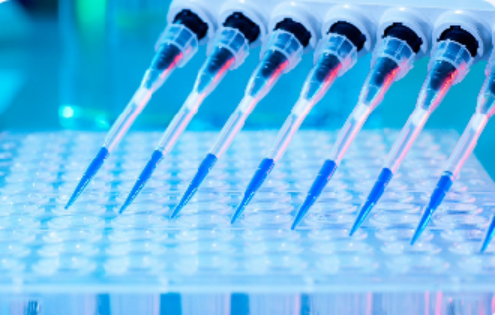
Modern solubility studies often use biorelevant media that mimic gastrointestinal fluids. Simulated gastric and intestinal fluids, with bile salts and phospholipids, better represent in vivo dissolution for oral drugs. These media reveal food effects, precipitation risks, and formulation needs. To support large pipelines, labs pair biorelevant systems with high-throughput platforms. Miniaturized shake-flask, 96‑well plate formats, and automated sampling allow rapid screening across pH, media, and excipient conditions. Teams can assess solubility enhancements from surfactants or enabling formulations early. This integrated approach accelerates candidate selection and reduces late-stage surprises in bioavailability and exposure.
Integrating Solubility Data With Physicochemical and ADME Studies
Solubility data gain value when scientists integrate them with broader physicochemical and ADME profiles. Teams combine solubility with lipophilicity (logP/logD), pKa, permeability, and protein binding to classify compounds using frameworks like the Biopharmaceutics Classification System. These relationships highlight whether absorption is limited by solubility, permeability, or both. Medicinal chemists use this insight to adjust polarity, ionization, or crystal form. DMPK groups correlate solubility with oral exposure and develop predictive models. Formulation scientists select salts, co-crystals, or enabling technologies based on solubility limits. This cross-disciplinary integration supports rational design and risk-based development decisions.
Conclusion
Measuring solubility in physicochemical studies requires a blend of rapid screening and rigorous equilibrium methods. Kinetic assays support early triage, while thermodynamic studies define robust, regulatory-ready values. Analytical technologies such as UV‑Vis, HPLC, and LC‑MS ensure accurate quantification across simple and complex media. Experimental factors, including pH, temperature, media composition, solid form, and DMSO content, must stay tightly controlled. Advanced approaches with biorelevant media and high-throughput tools bring solubility testing closer to real-world conditions. When teams integrate solubility with broader physicochemical and ADME data, they design better candidates and reduce development risk.